
 Last weekend, I was watching the Supercars race around Mt Panorama, and it reminded me of the classic “Oils Ain’t Oils” campaign from Castrol years ago. The message was simple: not all oils are the same, and choosing the right engine oil is essential for the long-term health and performance of your car’s engine.
 Last weekend, I was watching the Supercars race around Mt Panorama, and it reminded me of the classic “Oils Ain’t Oils” campaign from Castrol years ago. The message was simple: not all oils are the same, and choosing the right engine oil is essential for the long-term health and performance of your car’s engine.
The same principle applies to gate automation—not all systems are created equal. Domestic gate motors and commercial gate motors are designed for very different environments and serve distinct purposes. If you’ve ever wondered, “Is one really better than the other?” the answer is a resounding YES!
While you might get away with choosing the cheapest option in other aspects of life, when it comes to safety and security, it’s crucial to invest in the right product for the job. In this article, we’ll explore the key differences between domestic and commercial gate automation and explain why selecting the right motor for your specific needs makes all the difference.
1. Purpose
The first question to ask is, “How is this gate going to be used?” Domestic gate motors are primarily designed for residential properties, typically automating gates in homes and driveways. In contrast, commercial gate motors are built for larger, heavier gates used in commercial and industrial settings, such as factories, warehouses, businesses, and gated communities.
2. Type of Gate
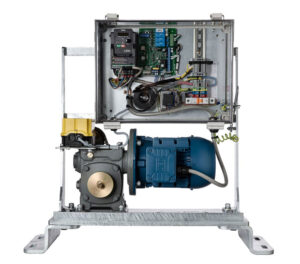 When selecting a gate motor, it’s important to consider the type of gate being automated. Residential gates are typically smaller and lighter, focusing on aesthetics, basic functionality, and low-level security.
In contrast, commercial and industrial gates are much larger, heavier, and designed for higher load-bearing capacity. These gates are built for durability, frequent use, and challenging environmental conditions while providing enhanced security.
3. Usage
How often you intend to use your gate has a major impact on which automation system is best suited to your needs. Domestic gate motors are designed for light use, typically opening and closing just a few times a day. In contrast, commercial and industrial gates are installed in high-traffic environments, with gates frequently operating throughout the day and night. These gates require a commercial motor with a 100% duty cycle, meaning the motor can run continuously without needing to rest or cool down. Motors with a 100% duty cycle are built to withstand the heat generated during continuous operation, making them ideal for sustained performance and suited to Queensland’s demanding climate. Many suppliers promote European motors, which aren’t necessarily suited to our unique weather conditions. So, ask the essential question: where does the motor come from?
4. Security Features
Identifying the desired security features for your gate system is crucial in determining the type of gate automation you need. Domestic gate automation typically focuses on basic security features like remote controls, intercom systems, and safety sensors. In contrast, commercial and industrial gate automation integrates more advanced security measures, such as access control systems, safety compliance, surveillance, and seamless integration with broader security systems. In summary, commercial gate automation systems are more advanced and robust, while domestic systems are designed to meet basic residential security needs.
 5. Compliance and Regulations
 5. Compliance and Regulations
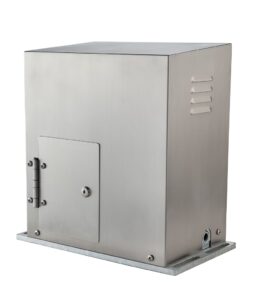
Domestic gate motors are relatively easy to install, making them a good option for individuals with handyman skills. In contrast, commercial gate automation requires professional installation by licensed electricians and gate automation specialists. This ensures that your gate is electrically and mechanically safe, compliant with mandatory WHS laws, secure, and reliable for long term use.
6. Cost
As you can see, domestic and commercial gate automation systems differ significantly, and choosing the right option requires a careful review of specific applications and requirements. One key aspect that I haven’t yet mentioned, which often becomes the primary criteria for decision-making, is cost.
Domestic gate automation is generally more affordable, as it’s designed for residential use. However, this can sometimes lead builders or fencing contractors to install domestic systems on commercial and industrial gates. This ‘cutting costs to the bone’ approach results in lower-quality domestic automation being used in high-traffic, high-security environments, which these systems are not built to handle. These practices are often aimed at winning jobs or meeting minimum requirements during the defect liability period. Unfortunately, end users may be unaware of the potential risks until it’s too late, often noticing issues only after the first 12 months. All commercial motors should come with a 2-3 year warranty for added peace of mind.
–

As I watched the supercars race around the Mountain, I listened to the teams discuss the importance of selecting the right engine oil to meet the unique demands of the Bathurst 1000 event. Even after all these years, the slogan “Oils Ain’t Oils” still holds true, and teams must be discerning when choosing the right engine oil for the uniqueness of the race.
This principle applies equally to selecting the right gate automation system for your domestic, commercial, or industrial gate. Choosing the appropriate automation system for your specific gate and needs is crucial, as not all systems are equally suitable for different applications.
The bottom line? “Oils Still Ain’t Oils”, so it pays to understand which automation system is right for your gate.